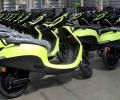
From premium electric motorcycles to mass-market scooters, manufacturers are rapidly expanding their portfolios to capture a larger share of the booming market.

The state is also the biggest market for TVS, another incumbent player, and together with Bajaj Auto, they accounted for 88 per cent of Maharashtra's total electric scooter sales last month. As many as 8,417 units were sold in Maharashtra in September. Bajaj Auto's contribution was 4,048 vehicles and that of TVS was 3,389, according to model- and state-wise data from the Society of Indian Automobile Manufacturers (Siam).

From the customer point of view too, LFP batteries are safer and offer a longer life.
This is part of the nine memorandums of understanding (MoUs) worth Rs 5,027 crore, including Hero Group-backed Ather Energy's over Rs 600 crore investment, to establish a manufacturing facility for e-vehicles.

Maruti Suzuki India (MSIL) said on Thursday its operations are unaffected by the global rare earth magnet shortage, but added that the situation is "uncertain and evolving". The firm said it is exploring multiple solutions to maintain continuity in operations and will notify stakeholders in case of material impact.
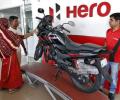
Hero MotoCorp anticipates a big rebound in two-wheeler (2W) sales in rural India over the next four to eight quarters, driven by favourable factors such as a decent monsoon, rising crop prices, improved employment conditions, and increasing consumer confidence, its chief executive officer (CEO) Niranjan Gupta said on Wednesday. Amid tepid rural sales, he stated that there is a "strong case" for GST (goods and services tax) on entry-level two-wheelers, which are under 125 CC, to be moved down from 28 per cent to 18 per cent as they are used by "masses".

Tamil Nadu -- often dubbed as India's own Detroit due to its thriving automobile manufacturing ecosystem -- is in no mood to miss the EV bus either. Recent developments attest to it. Vietnamese electric vehicle (EV) maker VinFast has promised a $2 billion plant in the southern state. And as promised earlier, the work on Tata Motors-JLR plant will kick off next week, on September 28, after the foundation stone laying ceremony.
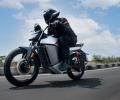
Clearly, some of the bullishness of the early days has gone missing. Ola's market share is slipping amid rising competition from incumbents like Bajaj Auto and TVS.
Lithium-ion cells, primarily imported from China, are likely to become cheaper following punitive tariffs imposed by the US on Chinese battery cells.
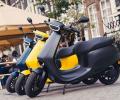
Electric scooter registrations of eight companies which represent 95 per cent of the market have seen a sharp fall of over 24 per cent in May. They have registered 32,680 electric scooters against 43,098 in April according to VAHAN data from the Ministry of Road Transport and Highways available till the evening of 31 May. Auto analysts say the fall is a reflection of the initial pent up demand in the market for such vehicles,which was evinced in huge bookings, being met.

Even as India overtakes Japan in automotive sales in 2022, moving to third place for the first time, oddly enough the country's biggest motor show is going to see some big hitters give it a clear miss. Some prominent automotive brands have cited high event costs, negligible returns on investment, poor event management, and unfavourable location as reasons for their reluctance to participate. Major pure-play electric two-wheelers, too, are riding past this year's edition of the Auto Expo.

With nearly 100 launches and unveils, the Bharat Mobility Global Expo 2025, held in Delhi from January 17 to 22, made one thing clear to automobile enthusiasts: Electric vehicles (EVs) are the way ahead for the Indian auto market for years to come.

With India's gig economy projected to double in size, reaching over 10 million workers in the coming years, Ola Electric unveiled its new line of budget-friendly e-scooters, starting at under Rs 40,000. The market responded positively, with Ola Electric's stock rising by 5.67 per cent, closing at Rs 73.47 on the BSE.

Companies making electric two-wheelers, through their association Society of Manufacturers of Electric Vehicles (SMEV), have taken on the Department of Heavy Industries (DHI), saying they did not get subsidies for even half the mandated 1 million units they manufactured. Subsidies are given under Faster Adoption and Manufacturing of Hybrid and Electric Vehicles 2 (FAME II). In a petition to the parliamentary standing committee on industry energy and estimates, the SMEV said the department had done an "accounting error" by showing that it (the department) was close to achieving the mandated target by including sales of the EVs that were "not funded" under the scheme.

The Ministry of Heavy Industries has approved 11 electric vehicle (EV) manufacturers, including Ather Energy, Bajaj Auto, Hero MotoCorp, Ola Electric, and Mahindra, to receive incentives under the recently introduced Electric Mobility Promotion Scheme (EMPS) 2024. "A total of 11 firms have been granted approval under the EMPS, with several more under consideration," informed a senior official of the ministry to Business Standard. The scheme aims to sustain the growth in EV sales, replacing the Faster Adoption and Manufacturing of Electric Vehicles - II (FAME-II) scheme.
The two-wheeler giant had only 14 per cent of the electric two-wheeler market in May this year, but its 26.8 per cent in December

For the first time, the event will take place across three locations in Delhi: Bharat Mandapam at Pragati Maidan, Yashobhoomi Convention Centre at Dwarka, and India Expo Mart at Greater Noida.
Under regulatory scanner, Bengaluru-based Ola Electric has witnessed an uptick in its sales after facing a decline during the last few months. The company's daily average sales rose to 1,154 units in October, according to Vahan data from the Ministry of Road Transport and Highways (MoRTH). With sales reaching 17,315 units between October 1 and October 15, the company has also boosted its market share to 34 per cent, up from 27 per cent in September, in the electric two-wheeler (e2W) segment.

The electric scooter juggernaut which has been picking up momentum with heady growth month-on-month is now slowing down. The combined number of registrations in April of eight electric two wheeler companies has seen a dip of over 1 per cent to 43,061 vehicles, according to data from the Ministry of Road Transport & Highways' site VAHAN. The reasons are the continuing shortage of chips, especially after the Ukraine-Russia war, and the spate of fires which have led to scooters being recalled by manufacturers.
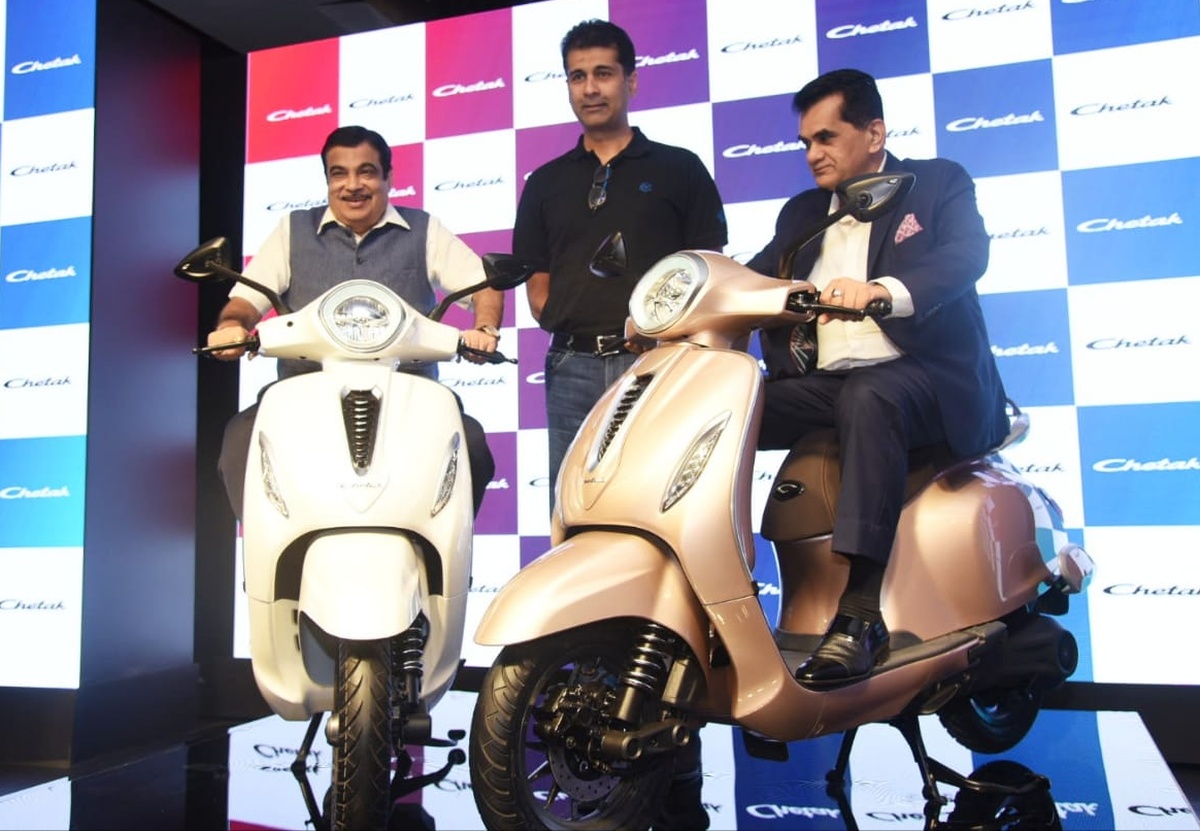
EV players suggest a reduction in the goods and services tax on batteries from 18 to 5 per cent as it would help push demand.

With the number of start-ups reaching the unicorn level falling drastically in 2023, the Hurun Unicorn Index said it has demoted eight gazelles - start-ups that were founded in 2000 and have the potential to go to unicorn in three years - to cheetahs.
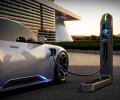
At Prestige Polygon Towers in Chennai's Teynampet, hectic preparations are on for a mega global investors' meet under the aegis of Guidance Tamil Nadu (the state investment promotion agency) scheduled for January 2024. Asked about the key focus areas of the meet, the agency's managing director and chief executive officer, V Vishnu, said the state was betting big on electric mobility. This is no surprise, given that the state has signed electric vehicle (EV)-related memorandums of understanding (MoUs) with several companies in the recent past that may bring in investments worth around Rs 33,000 crore with the potential to create over 43,000 job opportunities.

'What volumes will we have with a Rs 1 lakh product?' 'As a company, we will not restrict it to a segment.'

The new four-wheeler (4W) electric vehicle (EV) policy may spur the entry of global majors. The manufacturing policy cuts Customs duty to 15 per cent, given a minimum investment commitment. It calls for a minimum investment of Rs 4,150 crore (about $500 million) for making electric four wheelers (e-4Ws), with manufacturing to commence within three years of approval.
Upon completion, the factory will create almost 10,000 jobs and will initially have an annual capacity of 2 million units.

SoftBank-backed Ola Electric took the wraps off its maiden e-scooter offerings -- Ola S1 and S1 Pro -- for a commercial launch on Sunday. With prices starting from Rs 99,999 (excluding state government incentives, registration fee, and insurance cost), the Bhavesh Aggarwal-founded firm said the e-scooters are designed and engineered in India for the world and will deliver the best scooter experience to the consumer. He suggested that after 2025, sale of petrol-powered two-wheelers should not be allowed.
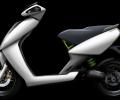
Large manufacturers are investing in small companies to get a peek into their R&D. Alnoor Peermohamed and Anita Babu report.

Ola Electric's technology team is working hard to iron out the technical kinks that marred the electric vehicle company's hyped online sale of its electric scooters (e-scooters) - the S1 and the S1 Pro - on Wednesday, said company sources. The SoftBank-backed firm is facing technical difficulties in making the website live for the purchase of its e-scooters. According to company sources, the website couldn't go live as there were integration issues.

Modi has set a target of generating 100 Gw of solar power by 2022.
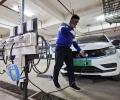
New Delhi's timing couldn't have been worse, both for India's fledgling electric vehicle (EV) sector and prospective electric bike buyers. It was hard to miss the perfect storm brewing for India's EV industry since early 2022. On one hand, you had several accidents involving battery fires that unnerved consumers; on the other, uncertainty had crept in over subsidies.

The country saw a massive year-on-year surge in the demand for electric vehicles, with retail sales of electric two-wheelers rising by 58 per cent, passenger vehicles by 130 per cent, three-wheelers by 82 per cent, and commercial vehicles by 171 per cent in March 2023, according to the data shared by the Federation of Automobile Dealers Associations (Fada). According to a report by JMK Research, the EV segment as a whole grew by 157 per cent during FY23, to 1,180,597 units, from 458,746 units a year ago. Overall, EV sales in March 2023 rose by 82 per cent from the March 2022 figure, the JMK report added.
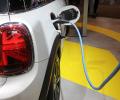
Electric vehicle retail sales in the country witnessed over three-fold jump last fiscal with two-wheeler offtake leading the segment, according to data compiled by automobile dealers' body FADA. Total electric vehicle (EV) retails reached 4,29,217 units in 2021-22, a rise of three-fold from 1,34,821 units in the financial year 2020-21, the industry body said. Total EV sales had stood at 1,68,300 units in the 2019-20 fiscal, it noted.

Honda Motorcycle and Scooter India (HMSI) on Wednesday forayed into the fast-growing domestic electric mobility market with the introduction of e-scooters, ACTIVA e: and QC1, with swappable and fixed batteries. With this, the Japanese two-wheeler maker will now be competing with other legacy players such as Bajaj Auto, Hero MotoCorp, TVS Group as well as pure EV players like Ather and Ola, who already have a good presence in the segment, which is growing at 34 per cent year-on-year.
Nearly a decade ago, the first fully electric vehicle (EV) caught fire on the road in the US. It was a model from Tesla, the world's most admired EV maker. A metal fragment punctured the underbelly of the vehicle, penetrating its battery pack, leading to a fire. Indian lawmakers and automakers have had nine years to study the incident (in fact, three Tesla Model Ss caught fire in two months in 2013) but seem to have learnt little.

As much as 35 per cent to 40 per cent of all vehicles sold in the country across segments will be electric by 2030, up from a mere 2 per cent this year, says a Bain & Co report released today. This translates to 14-16 million new electric vehicles (EVs) selling in a year. The inflexion point, which is now being seen month on month in many segments (such as two-wheelers which hit around 4-5 per cent in December), will be more than visible in 2026, when 4-5 million EVs across segments are expected to be sold, accounting for 15-20 per cent of the total sales, says the report.

Can Bhavish Aggarwal upend the electric two-wheeler market, which is now overwhelmingly in favour of scooters?
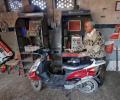
The impact for all electric two-wheelers, which are imported mostly from China, is that it will lead to price escalation that will be passed onto customers.

This year's edition, three years lost to the pandemic and scheduling, wore a distinctive shade of green, and, as would befit an era of technology shift from internal combustion engines to electric motors, had a clutch of high-technology exhibits and concepts. But the excitement of the expo's heyday was missing.

The deal brings the two start-up stalwarts - Bansal and Ola co-founder and chief executive officer Bhavish Aggarwal - together in the backdrop of growing foreign control in this space.
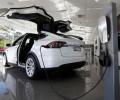
The $306-million investment in Ola Electric Mobility by SoftBank Corp, Arun Sarin Family, Ratan Tata and Matrix has been the biggest funding in this space in value terms this year.
